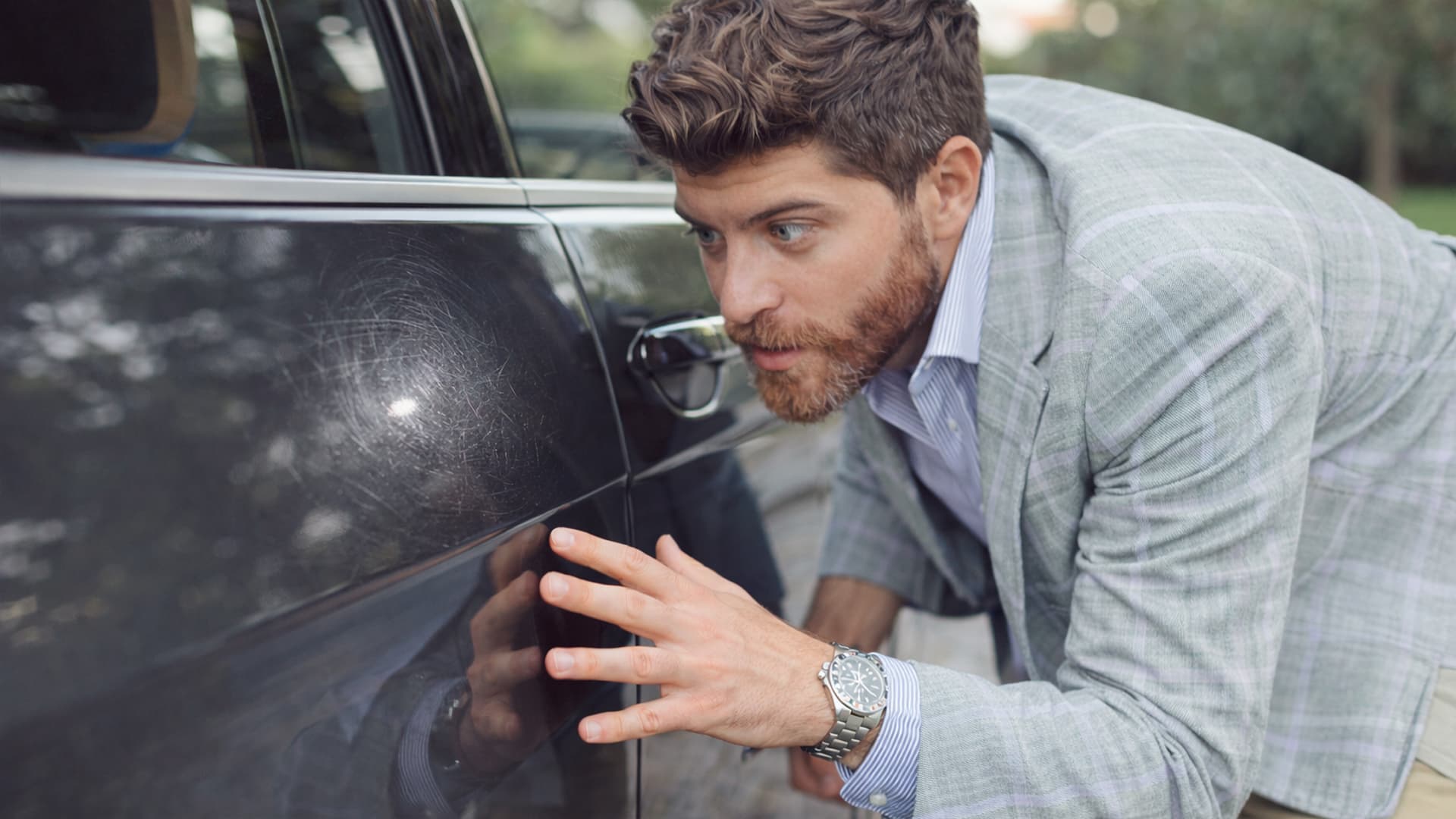
Contrary to popular belief, modern professional car washes do not cause swirls or micro-scratches.
It’s important to understand what actually causes swirl marks and micro-scratches on vehicle paint. Many customers believe that car washes are the primary cause of paint damage, but in reality, swirls form over time due to environmental exposure and everyday use. This article explains where swirls come from, the risks associated with different car wash methods, and what can be done to minimize them, as they can never be fully eliminated.
Where swirls come from
All vehicles develop micro-scratches and swirl marks over time. These imperfections often start to form during the manufacturing stage and continue to worsen and become more noticeable from the dealership stage through every mile driven, across all seasons, and even while parked outdoors.
We call them swirls because they appear in a circular pattern under sunlight and bright lighting. They are not, in fact, circular scratches, but random scratches that vary in size, shape, and direction across all vehicles. These random scratches reflect light in a circular way because sunlight is circular. As your eye moves over the paint, the reflection shifts, making the scratches appear circular.
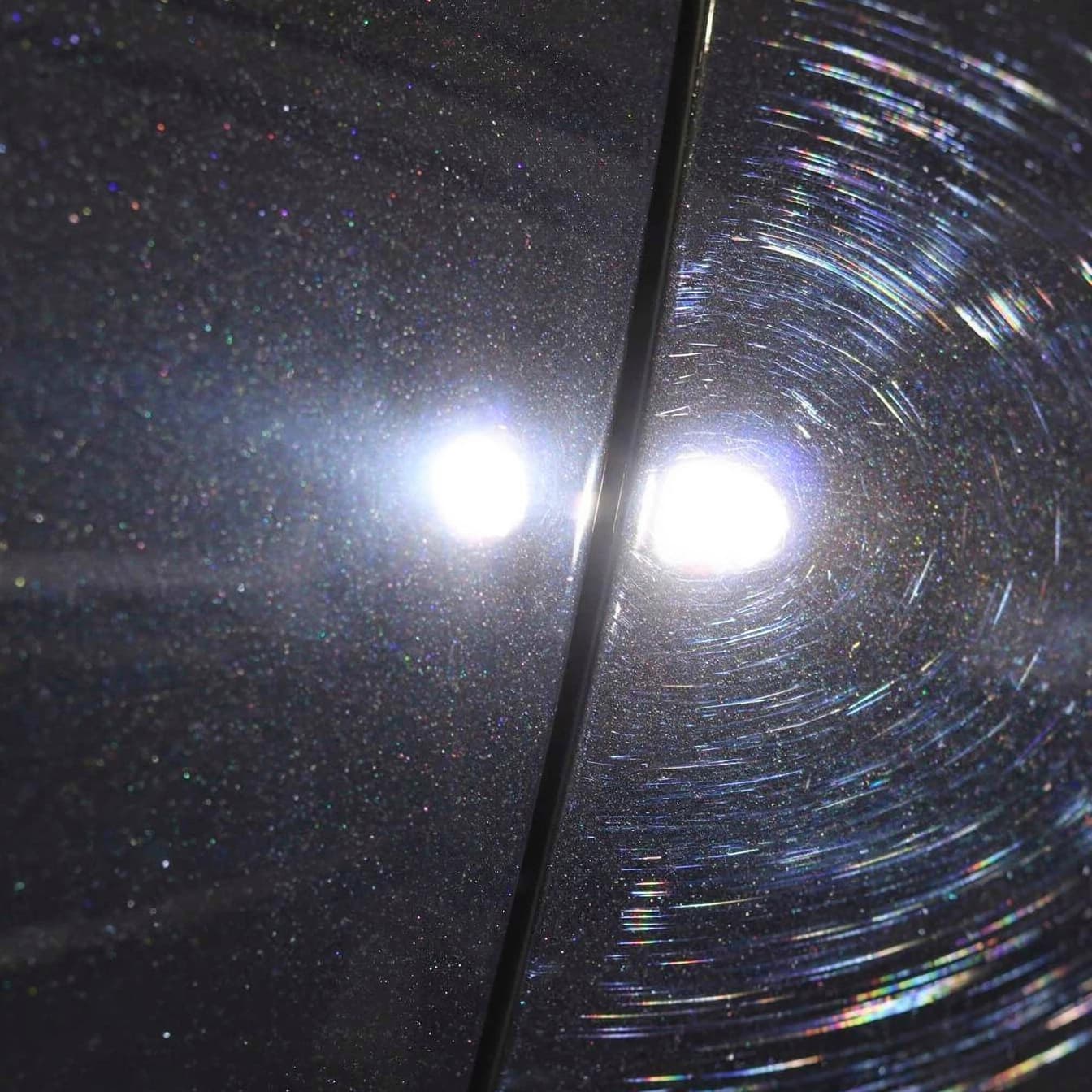
Dark-coloured vehicles, especially black cars, tend to show swirl marks more prominently, while lighter colours like silver or white can hide them more effectively. Many manufacturers now use waterborne paints for environmental reasons, which are softer and more prone to early swirling and micro-scratches.
Because swirl marks appear more visible after a wash, many people assume that car washes cause scratches. However, the reality is that these imperfections occur between washes, as dirt, dust, debris, and environmental contaminants settle on the vehicle’s surface. When a car is cleaned, the removal of dirt simply reveals what was already present.
If you shine a detailing light or bright light onto a brand-new black car on a dealership lot, you will already see sporadic scratches beginning to form. Over time, as paint ages and is exposed to UV rays, environmental factors cause random marks to appear across the surface. Year after year, these marks become denser, and swirl patterns become more visible.
Understanding modern car wash technology
Modern car wash systems have evolved significantly. At Valet Car Wash, our hybrid wash system combines high-pressure water with advanced closed-cell foam brushes to deliver a safe and effective clean.
Unlike outdated bristle and cloth brushes, closed-cell foam does not hold dirt or water, ensuring contaminants are not transferred between vehicles. These brushes are continuously rinsed with soap, water, and lubricating agents, and rotate at high rpm, preventing buildup of debris while maintaining a gentle touch on modern clear-coated surfaces.
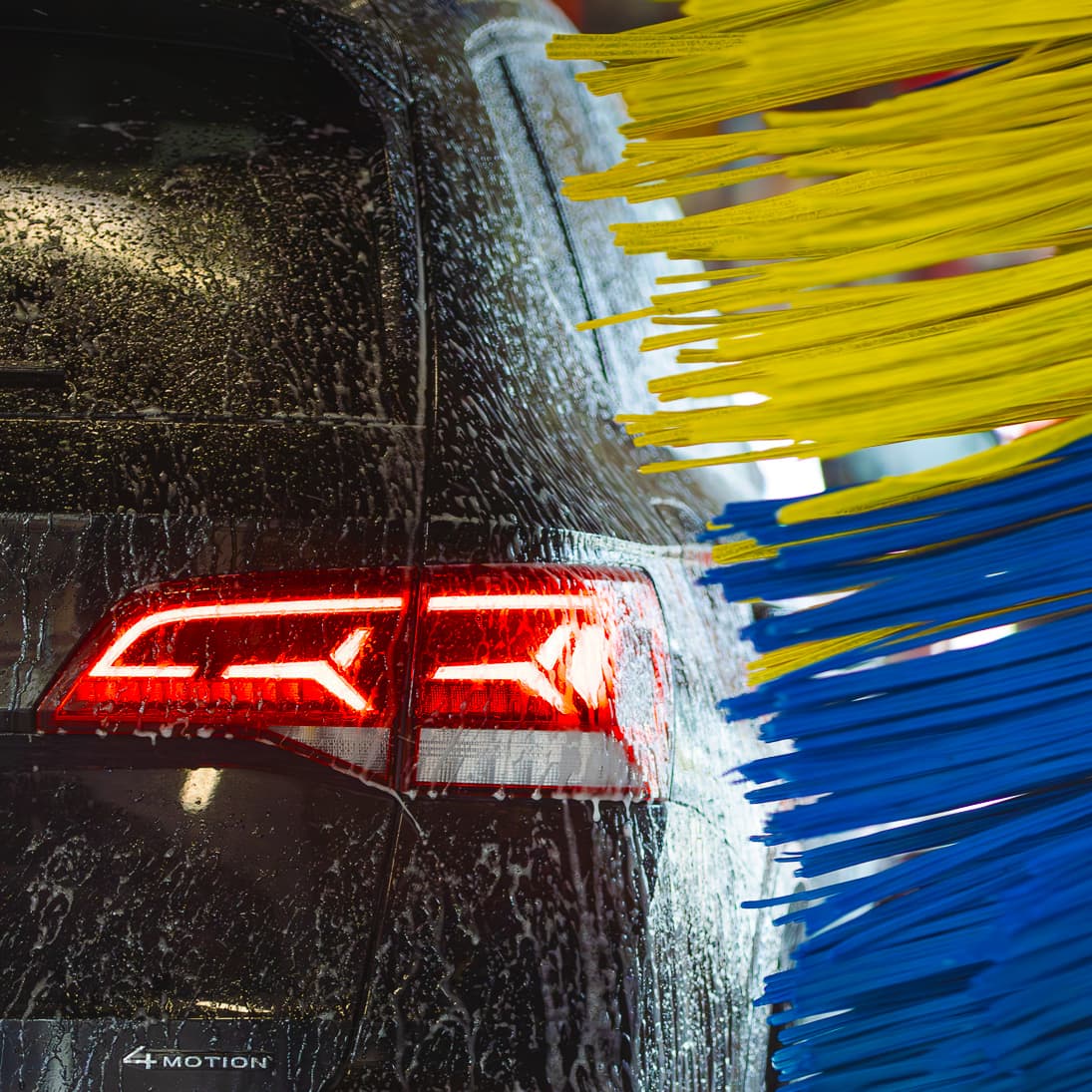
Modern professional car washes do not cause swirl marks in paint. Swirls are random in size and direction. If automatic car wash equipment caused swirls, the result would be a consistent mechanical pattern across every vehicle. However, the random nature of swirl marks does not match the movement or pattern of car wash equipment.
The truth about touchless car washes
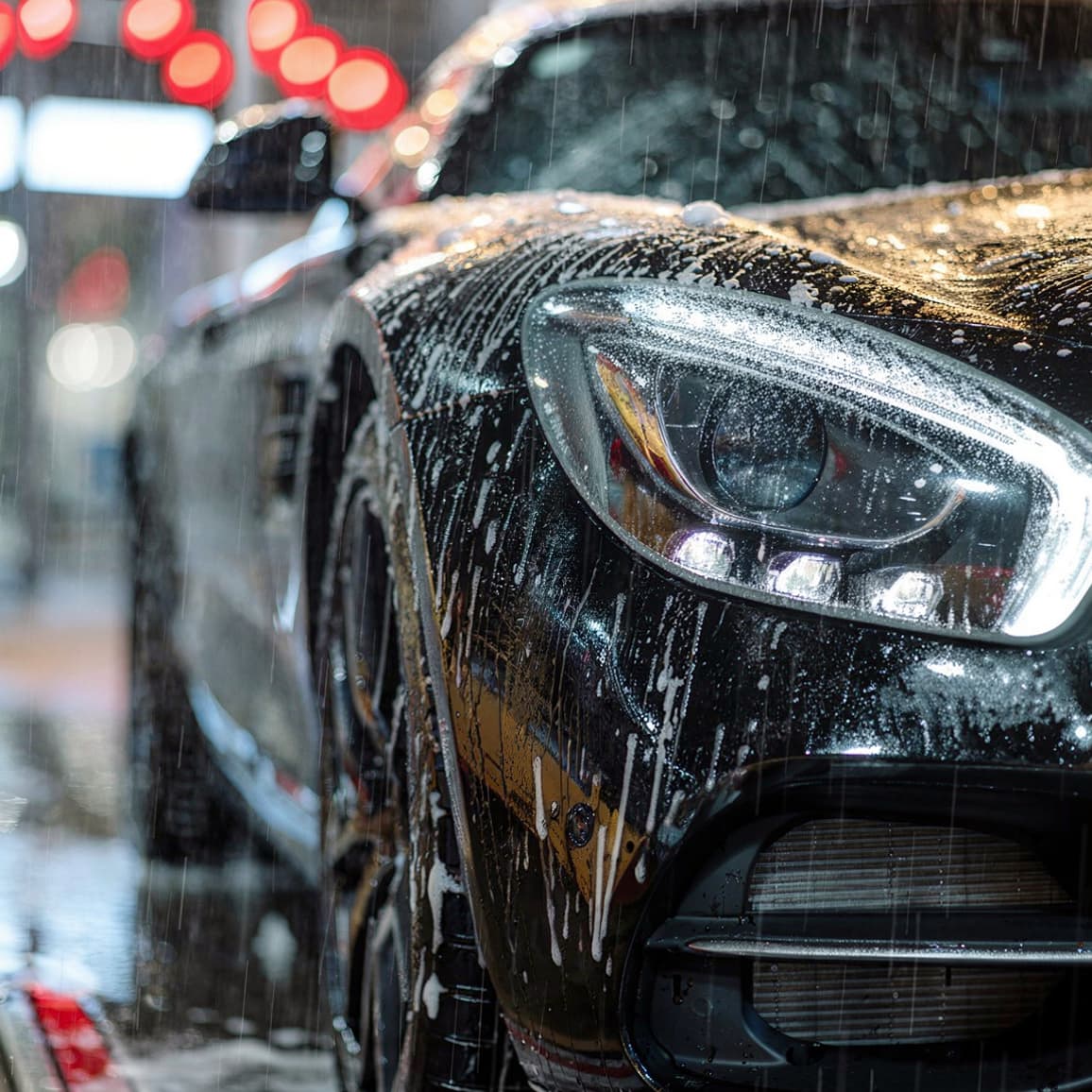
There is a common misconception that touchless car washes are safer. While they eliminate physical contact, they rely heavily on stronger, more abrasive chemicals to break down dirt.
These chemicals can strip protective wax layers and may negatively impact or etch vehicle trim, rubber, plastics, and rims over time. In fact, many vehicle manufacturers advise caution when using touchless washes frequently due to potential chemical-related damage.
Additionally, these stronger chemicals remove protective coatings, making it harder to maintain cleanliness in future washes.
The risks of hand washing
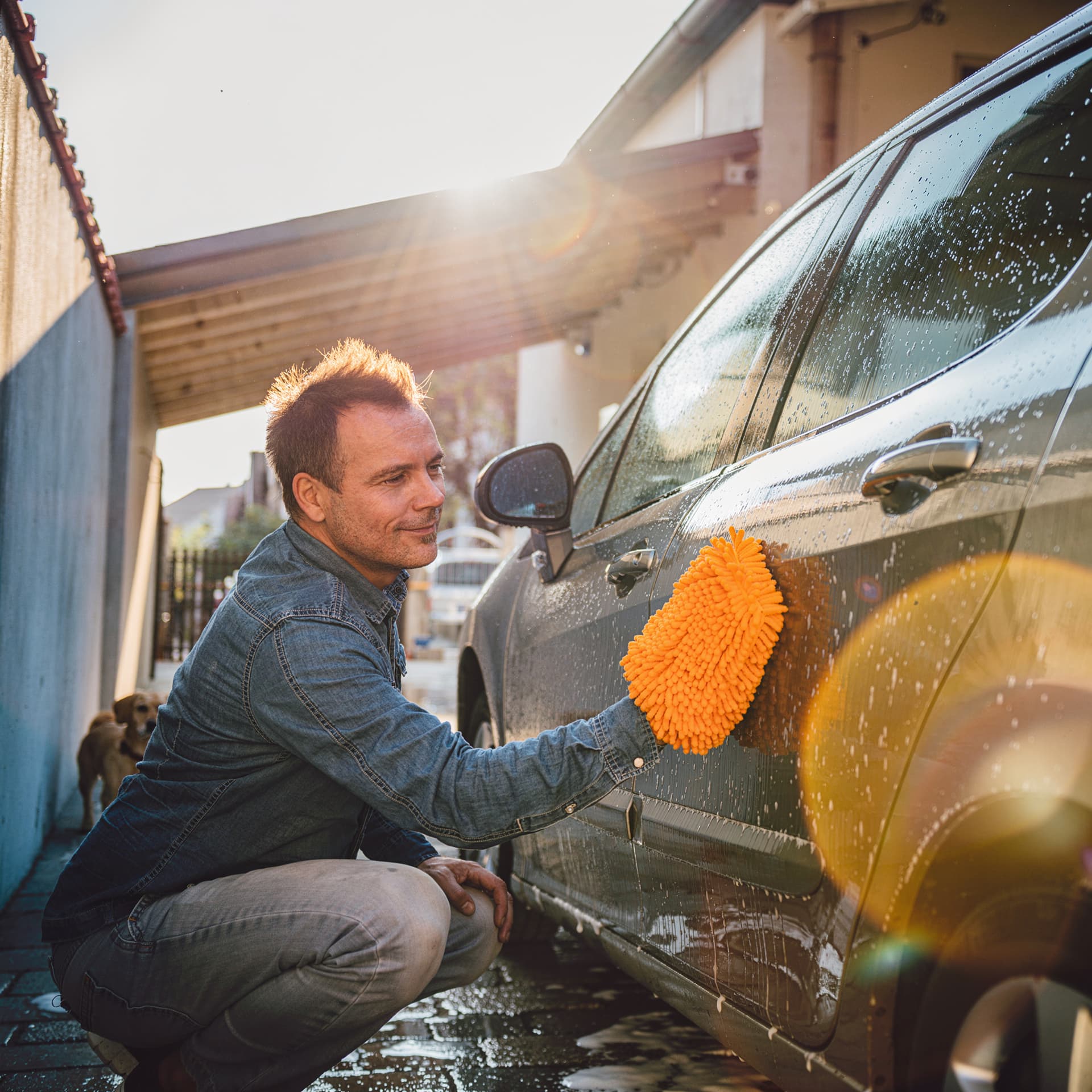
Hand washing is often perceived as the safest option, but it carries its own risks. Using wash mitts and buckets can reintroduce dirt back onto the paint surface, increasing the likelihood of micro-scratches.
Even with proper technique, wash mitts can trap contaminants and rub them across the clear coat. Drying the vehicle can also contribute to scratching if improper towels or excessive pressure are used.
In many cases, hand washing can pose a higher risk of swirl marks compared to a properly maintained modern car wash system.
Slowing down swirls
Swirl marks do not form instantly; they develop gradually over time due to continuous exposure to environmental elements such as dirt, dust, wind, UV rays, and regular contact. This is part of the natural aging of a vehicle’s paint.
Depending on the manufacturer, paint quality, colour, and usage, some vehicles will show swirl marks more quickly and more visibly than others.
The best way to minimize swirl marks is through consistent vehicle maintenance, including regular washing, waxing, and paint protection. Maintaining a protective layer helps reduce the impact of contaminants and preserves the integrity of the clear coat.
Ultimately, swirl marks are a natural part of vehicle ownership. While they cannot be completely avoided, they can be minimized with the right approach.
Choosing a modern, well-maintained car wash system, such as a hybrid system using high-pressure water and closed-cell foam technology, ensures a safer, more effective clean without relying on harsh chemicals or outdated materials.
Swirls and minor imperfections occur despite washing, not because of it. The key is not avoiding car washes, but choosing the right one.