Keeping your car clean in winters can be frustrating.
Winter conditions in Canada are particularly hard on vehicles. Snow, slush, freezing rain, and constant road treatment with snow create an environment where corrosion can develop quickly. While it may feel pointless to wash your car when it becomes dirty again almost immediately, regular winter washing is one of the most effective ways to protect your vehicle’s structure, finish, and long-term value.

Why winter car washing matters in Canada
Salt is spread on roads during winter to improve tires’ grip. But this salt starts reacting with the metal on your vehicle as salt is highly corrosive.
The frequent freeze and thaw cycles make the problem worse. Moisture repeatedly melts and refreezes, allowing salt and chemicals to penetrate seams, joints, and small chips in the paint. Over time, this leads to rust formation that can compromise both appearance and safety.
Regular car washing removes any salt, even from less visible parts like the undercarriage and tires, preventing unprotected metal parts from rusting. When choosing a car wash, it is highly recommended to find a wash that also includes an undercarriage spray to ensure the harder to reach spots are also frequently leaned.
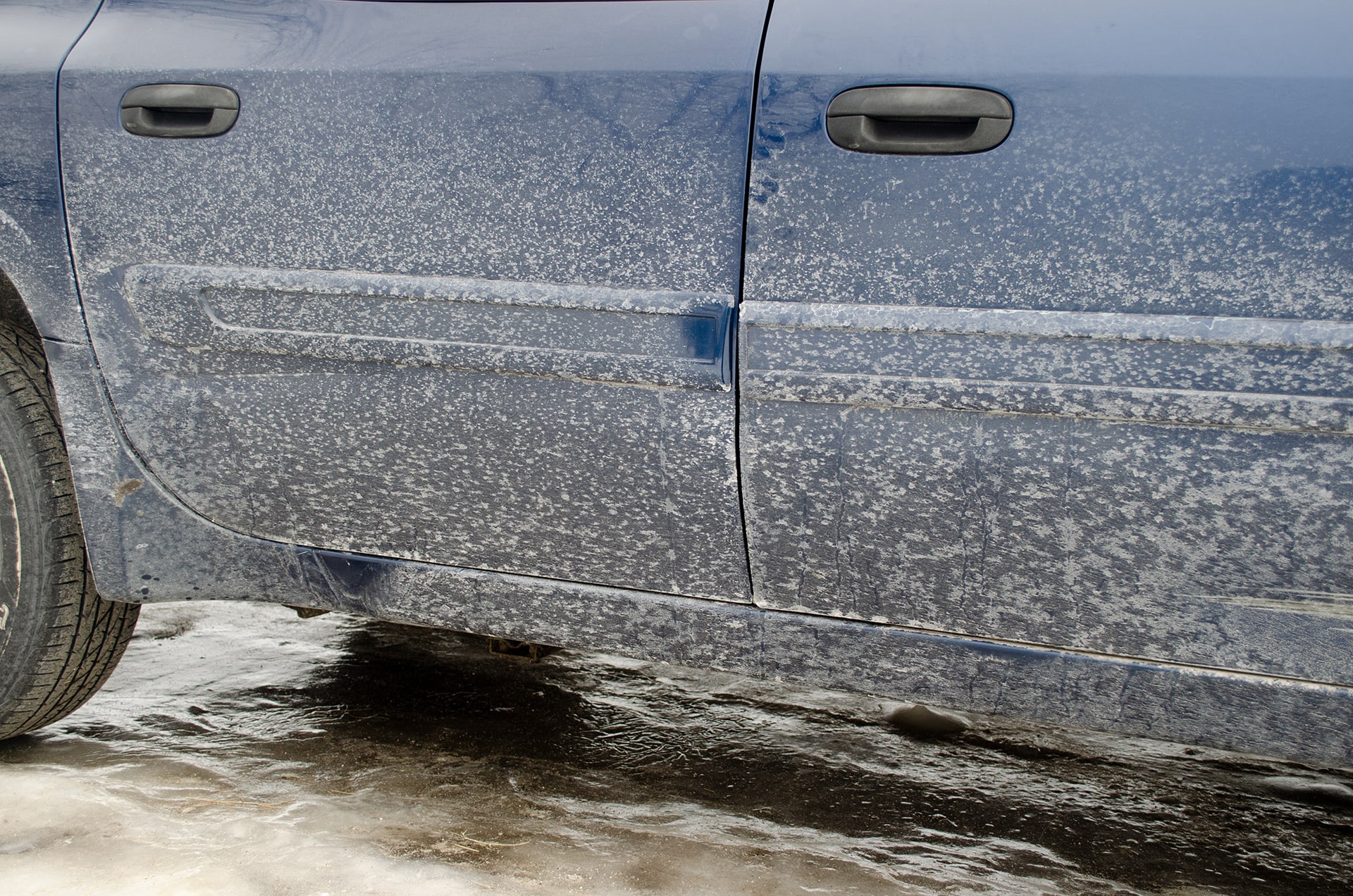
What happens if salt and de-icing chemicals are not removed
When salt and de-icing chemicals are left on a vehicle, corrosion can begin quickly, especially in areas that are difficult to see. Common problem areas include the undercarriage, wheel wells, brake components, and the lower edges of doors and panels.
According to a study by AAA(.pdf), approximately 15 percent of drivers in winter climates required at least one rust-related repair within five years due to salt and chemical exposure. The average repair cost was close to 500 dollars. In Ontario, similar damage can lead to costly repairs involving brake lines, suspension parts, exhaust systems, or structural components.
Salt can also cause cosmetic damage. Scratches or stone chips in the paint expose bare metal, allowing rust to form and spread underneath the surrounding paint. Once corrosion starts, it is difficult and expensive to stop.

Washing your car during extreme cold
When temperatures drop below minus 10 degrees Celsius, washing your vehicle presents additional challenges. Water can become trapped in door jambs, locks, mirrors, and window seals, where it may freeze and cause components to stick or stop functioning properly.
In extreme cold, water can also freeze on brake rotors or parking brake mechanisms, particularly if the vehicle is not driven after washing. This can lead to temporary brake issues or reduced braking performance.
If temperatures fall into double-digit negatives, it is often best to wait for a slightly warmer period before washing, unless salt buildup is severe. When you do wash your car in cold weather, make sure to dry door jambs and seals thoroughly, apply silicone based spray on rubber seals to keep them from sticking, and park in a heated or underground space to prevent freezing.